Home / About the Satoyama Initiative

About the Satoyama Initiative

Protecting biodiversity entails not only preserving pristine environments, such as wilderness, but also conserving human-influenced natural environments, such as farmlands and secondary forest, that people have developed and maintained sustainably over a long time. These traditional production landscapes—and the sustainable practices and knowledge they represent—are increasingly threatened in many parts of the world, due for example, to urbanization, industrialization, and rural population increase and decrease. Measures are urgently needed to conserve these sustainable types of human-influenced natural environments through broader global recognition of their value.

Initiation of the Satoyama Initiative

To tackle this critical issue, the Ministry of the Environment of Japan and the United Nations University Institute of Advanced Studies (UNU-IAS) jointly initiated the Satoyama Initiative. This international effort promotes a concept with worldwide application. Our core vision is to realize societies in harmony with nature, that is, built on positive human-nature relationships.

Notably, at the Tenth Meeting of the Conference of the Parties (COP10) to the Convention on Biological Diversity in October 2010, we intend to officially propose broader support for the Initiative and establishment of an international platform to accelerate our efforts. The Satoyama Initiative is expected to contribute significantly to achieving the objectives of the Convention.

Vision: Realizing Societies in Harmony with Nature

The vision of the Satoyama Initiative is to realize societies in harmony with nature, comprising human communities where the maintenance and development of socioeconomic activities (including agriculture and forestry) align with natural processes. By managing and using biological resources sustainably and thus properly maintaining biodiversity, humans will enjoy a stable supply of various natural benefits well into the future. Through the Satoyama Initiative, we will review how relationships between humans and nature should function in what are now referred to as socio-ecological production landscapes.

A three-fold approach: Our three-fold approach is intended to maintain and rebuild landscapes in which land and natural resources are used and managed in a more sustainable manner:

• Consolidating wisdom on a stable supply of diverse ecosystem services

• Integrating traditional ecological knowledge with modern science

• Creating a “New Commons” or comanagement system

Understanding the diverse ecosystem services that give rise to human well-being is an indispensable aspect of this approach, as is consolidation of wisdom on how humans can nurture a stable supply of these services. It is also critical to discuss how to create synergy between traditional knowledge and modern science, because without sufficient scientific corroboration, a wide range of traditional knowledge is not being used optimally. Also vital to the process is developing a new management system comprising, not only landowners and local residents, but also various interested parties who also benefit from relevant ecosystem services. This new social mechanism would support and promote the maintenance and rebuilding of socio-ecological production landscapes.

Perspectives on activities in practice: In following the above approach, the maintenance and rebuilding of socio-ecological production landscapes in various localities—that is, putting sustainable use and management of natural resources into practice—should entail five ecological and socioeconomic perspectives:

• Resource use within the carrying capacity and resilience of the environment

• Cyclic use of natural resources

• Recognition of the value and importance of local traditions and cultures

• Natural resource management by various participating and cooperating entities

• Contributions to local socio-economies

Areas Targeted

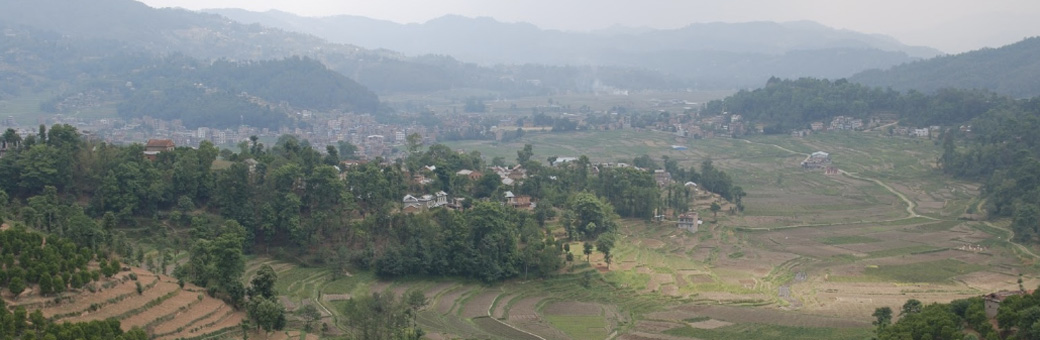
The Initiative will target such areas as villages, farmland, and adjacent woods and grasslands that have been formed and maintained through long-term human influence. These unique places at the interface of nature and human settlement have many names—muyong in the Philippines, kebun in Indonesia and Malaysia, mauel in Korea, and dehesa in Spain. In Japan, they are called satoyama—the name of our Initiative—which denotes mountains, woodland, and grassland (yama) surrounding villages (sato). Such landscapes vary widely due to their unique adaptations to local climatic, geographic, cultural, and socioeconomic conditions; however, they are equally valuable in terms of sustainability.

Expected Impacts of the Initiative

By establishing harmonious relationships between humans and nature, we expect the Satoyama Initiative to contribute to slowing the escalating loss of biodiversity worldwide, with the dual impacts of retaining and enhancing the biodiversity found in human-infl uenced natural environments and promoting sustainable use of natural resources. In the process, the Initiative may also help improve human well-being, for example, enhancing stable food production and income generation by applying pluralistic land uses and betterment of living conditions by promoting environmentally friendly biomass resources.

The International Satoyama Partnership

Launch of the International Satoyama Partnership is expected at the COP10. Comprising international organizations, national and local governments, civil society and nongovernmental organizations, private companies, university and other research organizations, among others, this partnership is intended to function as a platform for a variety of activities, such as information sharing and discussion of concrete and effective actions in the field. The Japanese government and UNU-IAS will play a major role in facilitating the partnership, as needed.

We propose the following highly useful activities for the partnership:

• Collect, analyze, and distill lessons from case studies to be disseminated via a searchable online database

• Encourage broad and effective research, including how to integrate results in policy and decision making

• Work with donor organizations on directing greater resources to and effective implementation of related projects

• Enhance the capabilities of stakeholders involved in maintaining or rebuilding socioecological production landscapes

• Encourage and expand networks among interested parties to promote information sharing and understanding of Satoyama Initiative goals and activities.